
















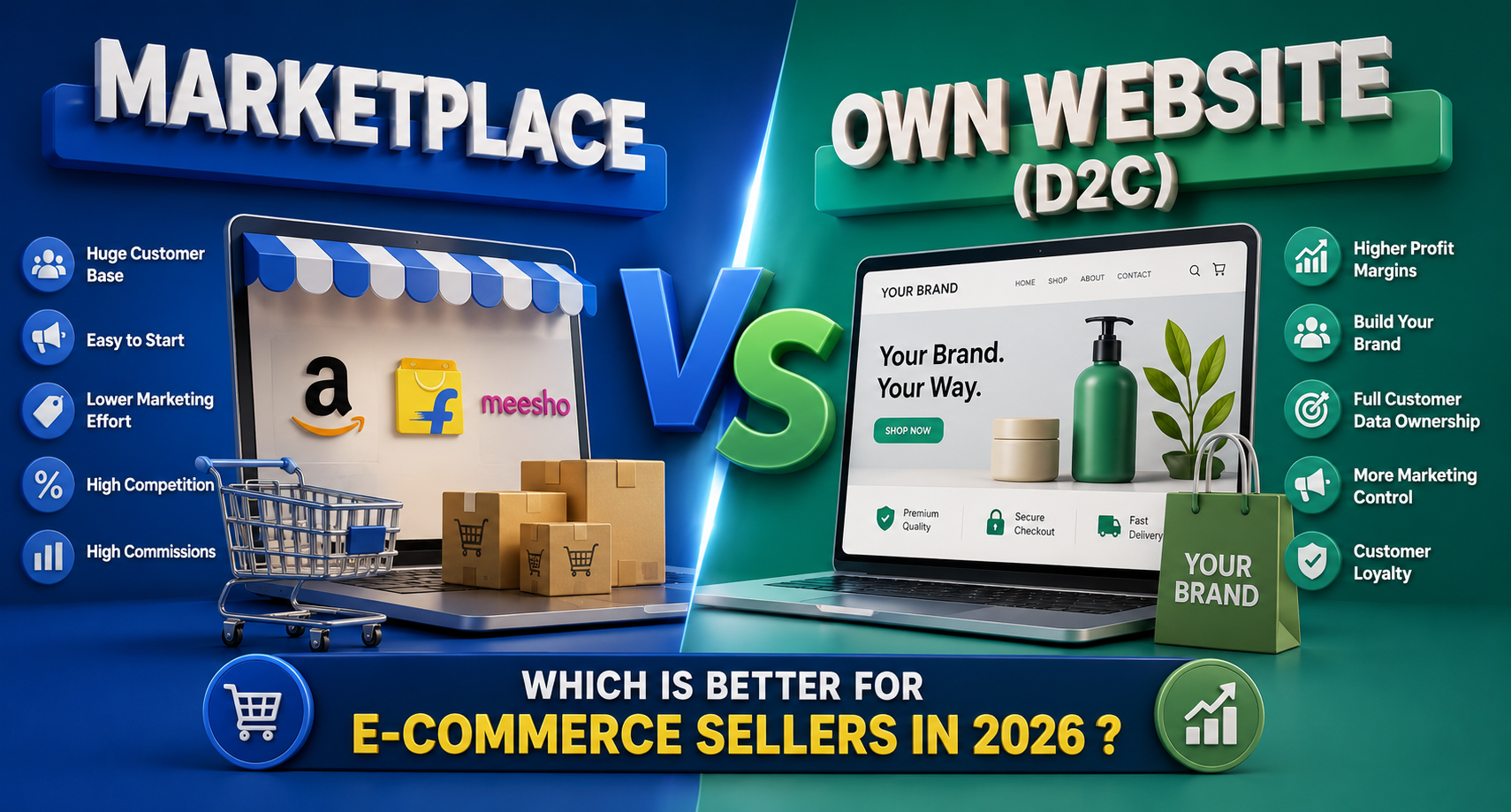
The Indian e-commerce industry is growing faster than ever, creating countless opportunities for businesses to sell online. However, one important question remains:
Should sellers focus on marketplaces like Amazon, Flipkart, Myntra, and Meesho, or invest in their own D2C website?
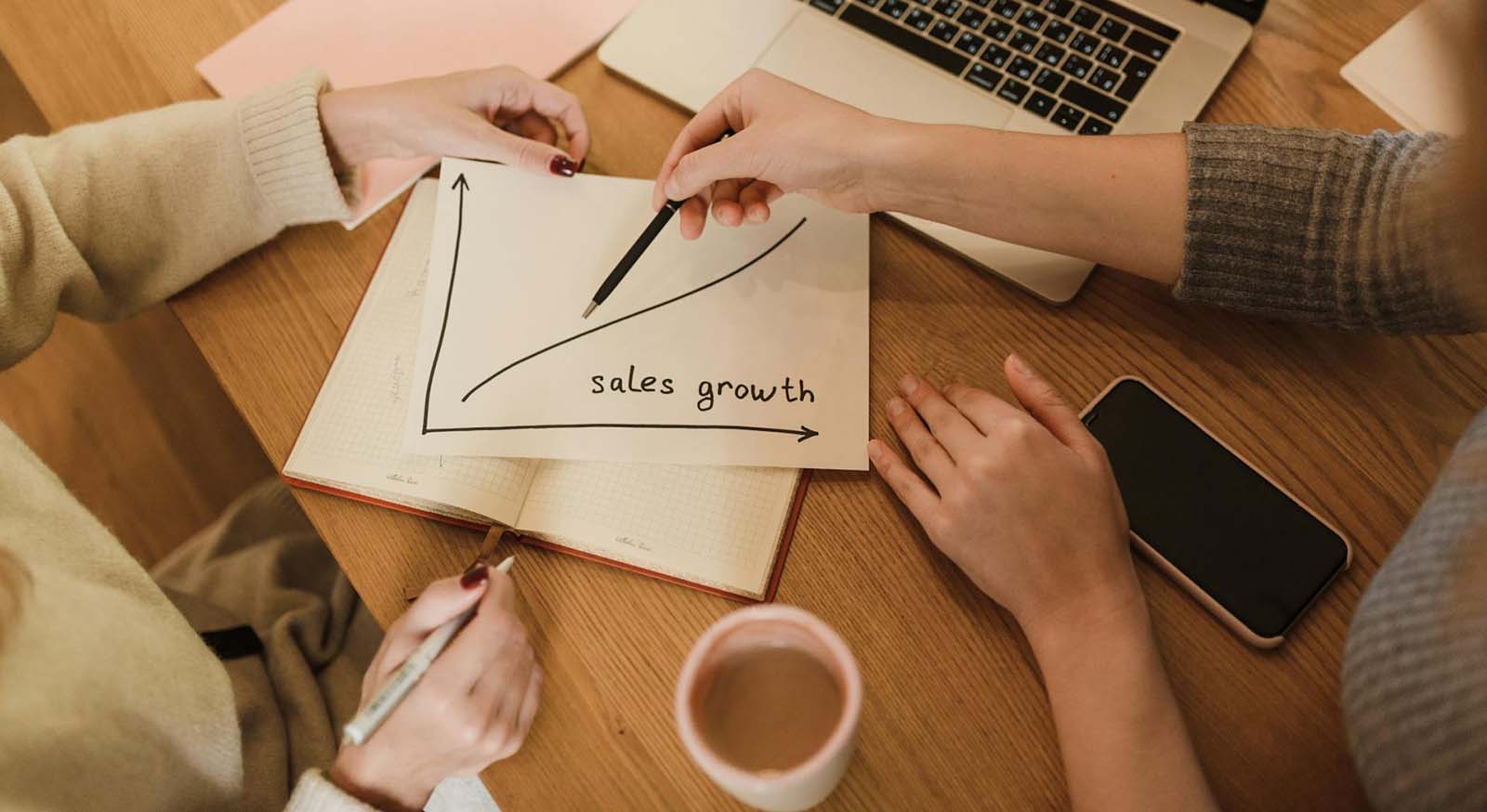
If you’re an online seller looking to scale your business in 2026, understanding the difference between marketplaces and D2C websites is crucial. Both channels offer unique advantages, but the most successful brands know how to leverage each strategically.
The Evolution of E-Commerce in 2026
The e-commerce industry is evolving rapidly, offering sellers more opportunities than ever before. From established marketplaces like Amazon, Flipkart, Myntra, Ajio, and Meesho to branded D2C websites, businesses now have multiple ways to reach customers.
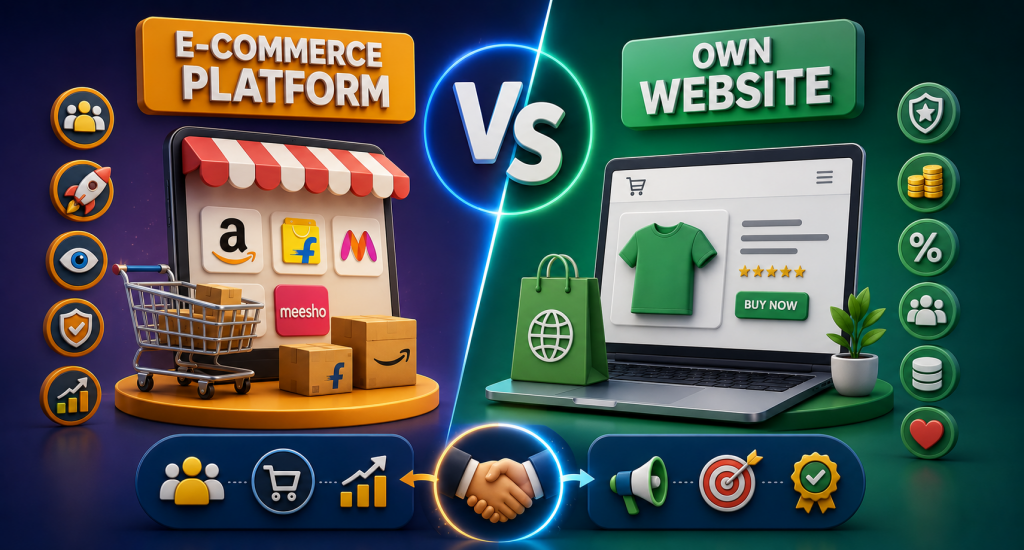
Why Marketplaces Continue to Be Powerful Growth Engines?
Marketplaces remain one of the most effective ways for sellers to expand their reach and increase sales.
Access to Millions of Customers
Platforms such as Amazon and Flipkart attract millions of shoppers every day, giving sellers instant exposure to a large audience.
Faster Market Entry
Sellers can launch products quickly and start generating sales without waiting to build an audience from scratch.
Customer Trust and Convenience
Customers are already familiar with these platforms, making it easier for sellers to build credibility and attract buyers.
Advanced Logistics Support
Marketplace fulfillment solutions simplify inventory management, shipping, and customer delivery experiences.
Promotional Opportunities
Marketplaces regularly run sales events, festive campaigns, and advertising programs that help sellers increase visibility and revenue.
Why a D2C Website Is Becoming Essential?
While marketplaces help sellers reach customers, a dedicated website allows businesses to build a stronger brand presence and create a personalized shopping experience.
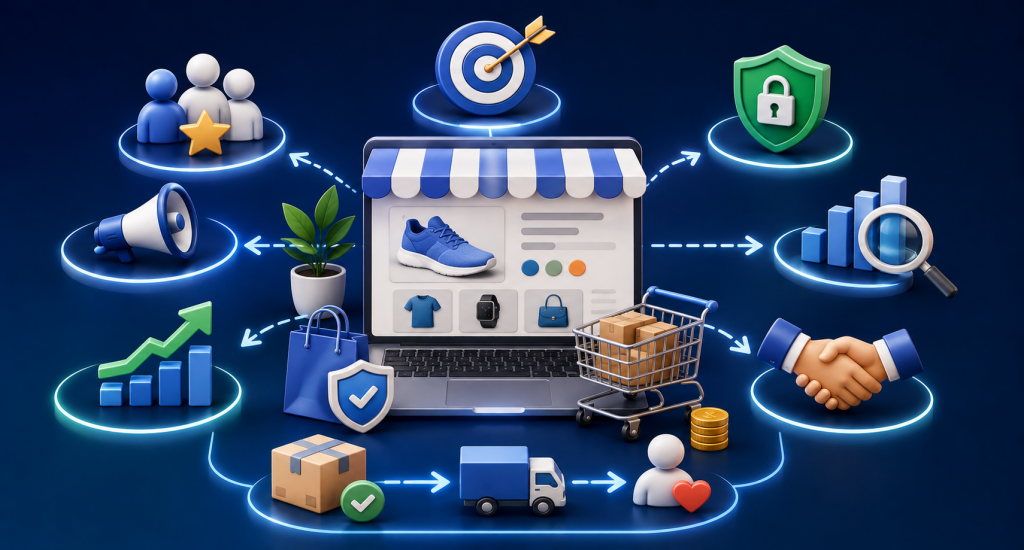
Build a Recognizable Brand
A website helps customers connect directly with your business, products, and story.
Create a Personalized Experience
Businesses can customize their website design, product presentation, and customer journey to match their brand identity.
Strengthen Customer Relationships
Through email marketing, WhatsApp communication, and loyalty programs, businesses can stay connected with customers and encourage repeat purchases.
Generate Organic Traffic Through SEO
A website can attract customers through Google Search, helping businesses grow their online presence over time.
The Winning Strategy: Marketplace + Website
The fastest-growing brands in 2026 are not choosing one channel over another.
They are building an integrated e-commerce ecosystem.
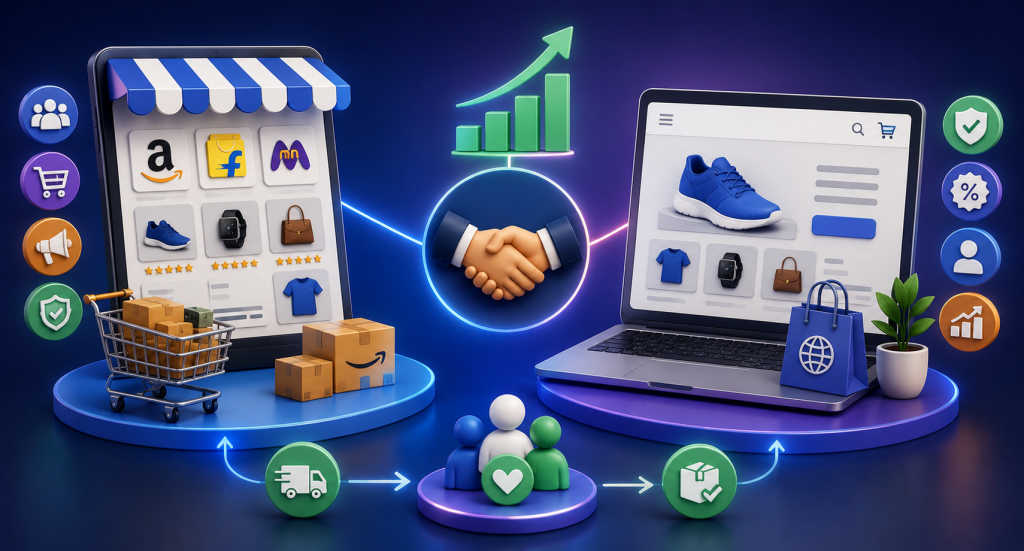
Marketplaces Help With:
✔️ Customer acquisition
✔️ Product visibility
✔️ Faster sales growth
✔️ Marketplace promotions and events
Websites Help With:
✔️ Brand building
✔️ Customer engagement
✔️ SEO and Google visibility
✔️ Repeat purchases
Together, these channels create a stronger and more sustainable business model.
Why Omnichannel Selling Is the Future?
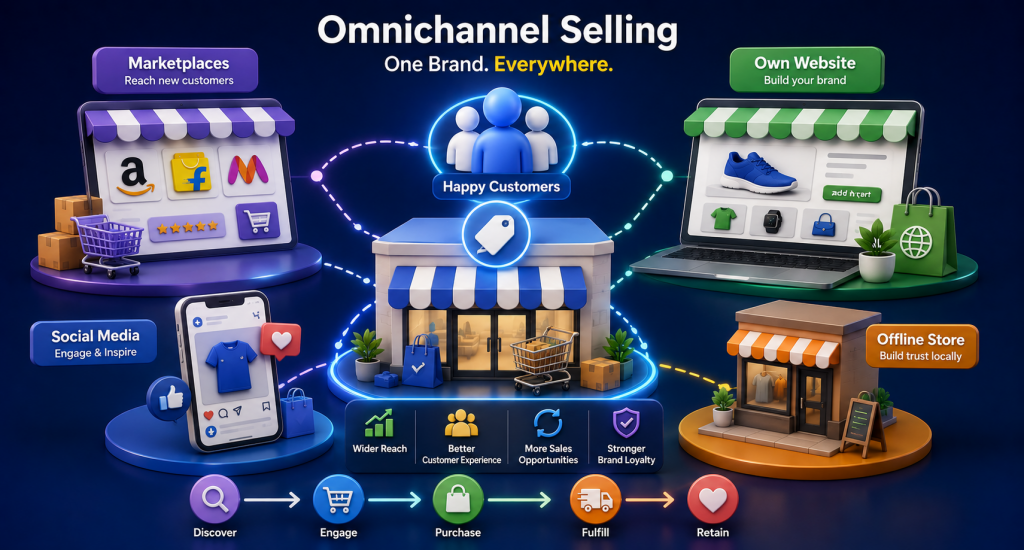
Today’s customers shop across multiple platforms before making a purchase decision.
A customer might:
Discover a product on Instagram
Search for it on Google
Compare options on Amazon
Visit the brand’s website
Complete the purchase through their preferred channel.
Conclusion
Brands that are present across multiple touchpoints are more likely to win customer trust and increase sales.
Success in e-commerce is no longer about being present on just one platform. It’s about creating a seamless shopping experience across marketplaces, search engines, social media, and your own website.
At E-Commerce Bharat, we help brands build, manage, and scale their online presence through marketplace management, website development, SEO, and complete e-commerce solutions—helping businesses grow confidently in the digital marketplace.
🚀 Ready to take your e-commerce business to the next level? Connect with E-Commerce Bharat today.